Français




What Tower Rush fairness covers
Tower Rush fairness involves both generating a result and checking how it was produced. Galaxsys says the original game uses a random number generator (RNG) and offers Provable Fairness. The verification procedure uses the inputs and published records for a specific round after play.
The first piece of evidence is the commitment published before the server accepts the stake. Think of it as a fingerprint for data fixed in advance. Once the corresponding input is disclosed, you can apply the version's commitment algorithm and compare the result with the value published before acceptance. The timing matters. A value first presented after settlement gives you a hash to compare but cannot establish that the same commitment was in place before the server accepted the stake.
The final digest answers a different question about Tower Rush fairness. It is computed from the exact bytes encoding the round's fixed inputs. To connect the digest to the floor event shown in play, apply the version's rule for extracting a number from the digest, then its rule for mapping that number to a game result. The game rules for Build and Cashout explain how a recorded floor event affects the amount in play.
Where to find Key, Salt and Hash Code
Open the shield panel in the original game's interface to reach the hash check. Key, Salt and Hash Code are interface labels. Use the protocol for your version to identify what each value represents and where it belongs in the calculation.
- Open the shield panel. Keep the round ID from the game history with the values you copy.
- Copy the full Key and Salt as displayed. Preserve their order and exact characters when entering them into the checker reached from the panel.
- Compare the checker output with the displayed Hash Code. For the separate full-digest check, use the complete digest for the same round ID.
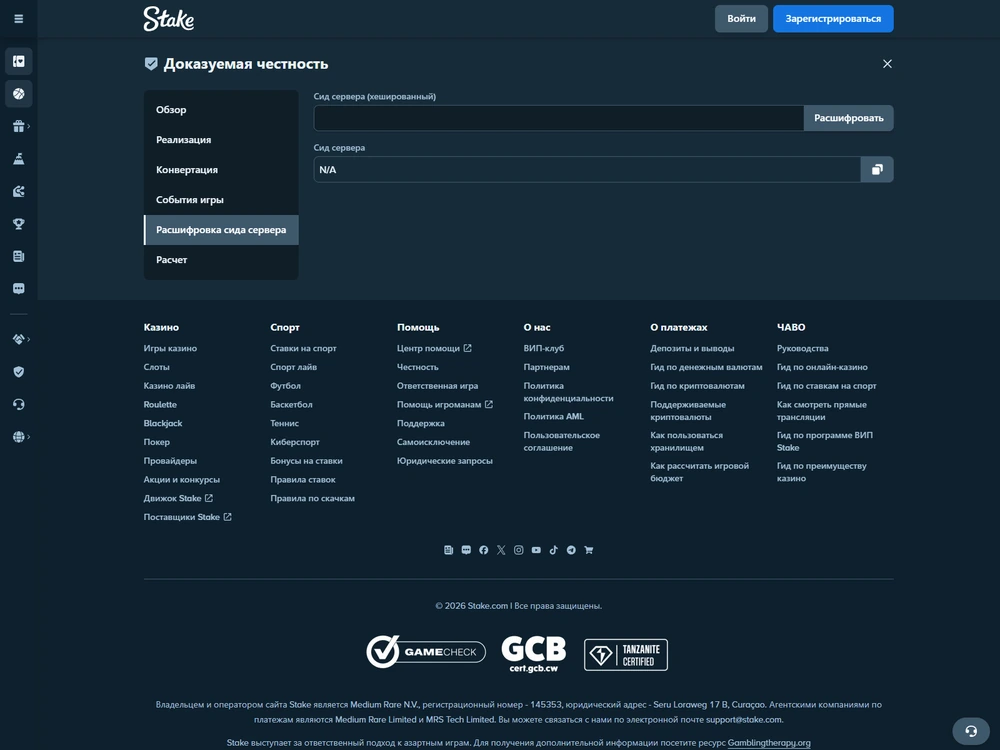
An exact match at this stage tells you that the checker produced the displayed hash from the inputs it took. For a complete check, establish the earlier commitment and reproduce the outcome separately. If you are looking at a different client, start by checking which game is the Galaxsys original.
How to reproduce a round from its inputs
To verify a Tower Rush result, follow the protocol for the exact round and version. A verification record needs to preserve both when the inputs were fixed and how the calculation turned them into an outcome. The round ID connects those records to the result in history.
| Evidence | When or where to check it | What to compare |
|---|---|---|
| Round ID and protocol version | Round record and corresponding protocol | The same game, round and calculation rules throughout |
| Published commitment | Before the server accepts the stake | Publication and acceptance times, then the recalculated commitment against the published value |
| Round inputs | As fixed for the round, before calculation of the final digest | Exact seed values and order, including client seed inputs and any nonce or additional input the version uses |
| Input bytes and full digest | At recomputation | Encoding, separators and the digest algorithm for that version, then the full digest for the same round ID |
| Extracted number and mapped outcome | After computing the digest | The number extracted under the protocol and the result it maps to in game history |
- Recreate the commitment. Check that the recorded publication precedes server acceptance. Use the applicable commitment algorithm and the input it commits to. Compare the full recalculated value with the one published before the server accepted the stake.
- Rebuild the round input. Check when the complete inputs were fixed. Assemble the values in protocol order and encode them exactly. Field order, a separator and a trailing space all affect the bytes fed into the calculation.
- Recompute the digest. Use the final digest algorithm defined for the round's version. Compare the full output to the one tied to that round ID. An algorithm used by a different game can produce a perfectly valid hash of its own input while answering a different question.
- Replay the outcome mapping. Extract the number as the protocol specifies, then apply the mapping for that version. Compare the resulting game event with the recorded event before applying the payout rules.
A match on the commitment checks that the revealed input agrees with the commitment published before server acceptance. A match on the final digest checks the calculation from the fixed inputs. A match on the mapped outcome links that calculation to play. None of those comparisons measures how often the generator produces each kind of event over many rounds. Galaxsys and the game's origin identify the provider and product to which the mechanism belongs.

How to check what the round paid
Start with the accepted stake, the recorded floor events or Cashout, the round status and the cap for that configuration. Gross is the game's final payout before subtracting the stake. Net accounts for the stake and any refund. The credit that follows an ordinary Cashout and the refund that reverses a void serve different purposes, even when the balance moves by the same amount.
FUN demo balance and payouts
On a Samsung Galaxy S25 FE, I logged 24 accepted Build cycles in a FUN demo session. Of those, 23 settled and one was voided. The initial 750.00 FUN balance moved through 254.00 FUN in stake debits, a 4.00 FUN technical refund and 283.44 FUN in payouts to close at 783.44 FUN. Comparable turnover was 250.00 FUN after excluding the void, and the session net was +33.44 FUN. The balance reconciles using those movements alone.
I recorded a positive payout in 13 of the 23 settled rounds, while 12 finished with a profit. The difference was a Cashout that returned exactly the stake. A positive credit can therefore belong to a break-even round, and the void belongs outside both counts.
The demo returned 113.376% of comparable turnover in that session. That percentage describes the stakes and payouts in the session. The demo profile uses 97% RTP as its theoretical benchmark for repeated play. A session above that figure can occur with correctly calculated payouts and says little about how the next round will end. The RTP and payout maths explain the difference between these denominators.
FUN and EUR settlement cases
The table compares FUN payouts and refunds, a separate EUR cap calculation and checks on acceptance or settlement status. Read the cap, rounding and final status within the stated case.
| Case | Recorded input or status | Settlement calculation | Net |
|---|---|---|---|
| Frozen Floor followed by a fall | 17.50 FUN at a protected 2.5× | The fall closes the round with 43.75 FUN gross | +26.25 FUN |
| Frozen Floor followed by Cashout | 17.50 FUN at 2.5×, then a 1.5× floor | 17.50 × 2.5 × 1.5 = 65.625 FUN, rounded half up to 65.63 FUN gross | +48.13 FUN |
| Temple Floor | 12.50 FUN, accumulated 2.2×, then a 3× sector | 12.50 × 2.2 × 3 = 82.50 FUN gross | +70.00 FUN |
| Payout cap | €50.00 stake, raw 64×, €2,500 cap | €3,200 before the cap, €2,500 gross after it, equivalent to 50× the stake | +€2,450 |
| Disconnect before acceptance | Request sent, stake unaccepted | Zero debit. Check the original request in history before making a new one | No balance change |
| Disconnect after acceptance | 6.50 FUN stake, confirmed 1.8× | Reopened history shows one gross credit of 11.70 FUN | +5.20 FUN |
| Pending, then void | 13.00 FUN pending | A 13.00 FUN refund clears the pending obligation. Comparable turnover is zero | 0 FUN |
| Retry after protected gross reaches the cap | Original settlement already final | The retry returns the same settlement ID and payout record | Original net preserved |
Frozen Floor locks the accumulated amount as protection. In the demo I recorded a 12.50 FUN stake that reached a protected 2.5× before a fall. It paid 31.25 FUN gross, for a net gain of 18.75 FUN. If a subsequent successful floor instead leads to Cashout, the resulting gross already includes the protected amount. Adding the protection again would count part of the same payout twice.
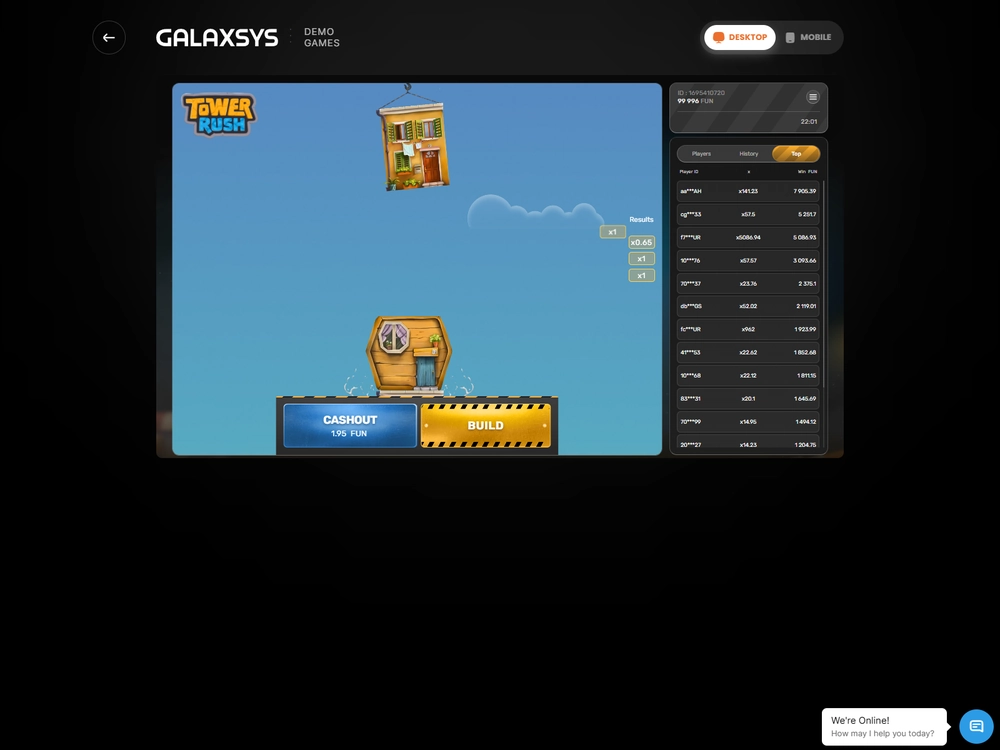
Temple Floor applies a multiplier when the wheel lands on a multiplier sector. The Frozen sector protects the current amount instead. For Triple Build, the extra floor multipliers also belong to the same accepted stake. In one demo cycle I logged three multipliers of 1.2×, 1.25× and 2× on a 3.50 FUN stake. Their product was 3×, for a single gross payout of 10.50 FUN. By contrast, the EUR cap example shows why a displayed 64× raw result and a paid 50× can both be correct. The cap limits the amount credited. Automatic settlement at the cap is a separate rule.
Which record to use after a disconnect
Use the original round ID and the server's acceptance and settlement records. I logged a demo round in which a 4.00 FUN stake took the balance to 759.90 FUN before a technical void. The full refund restored it to 763.90 FUN and the round contributed zero net. In an accepted round with a confirmed payout, reopening history should instead bring back that settlement.
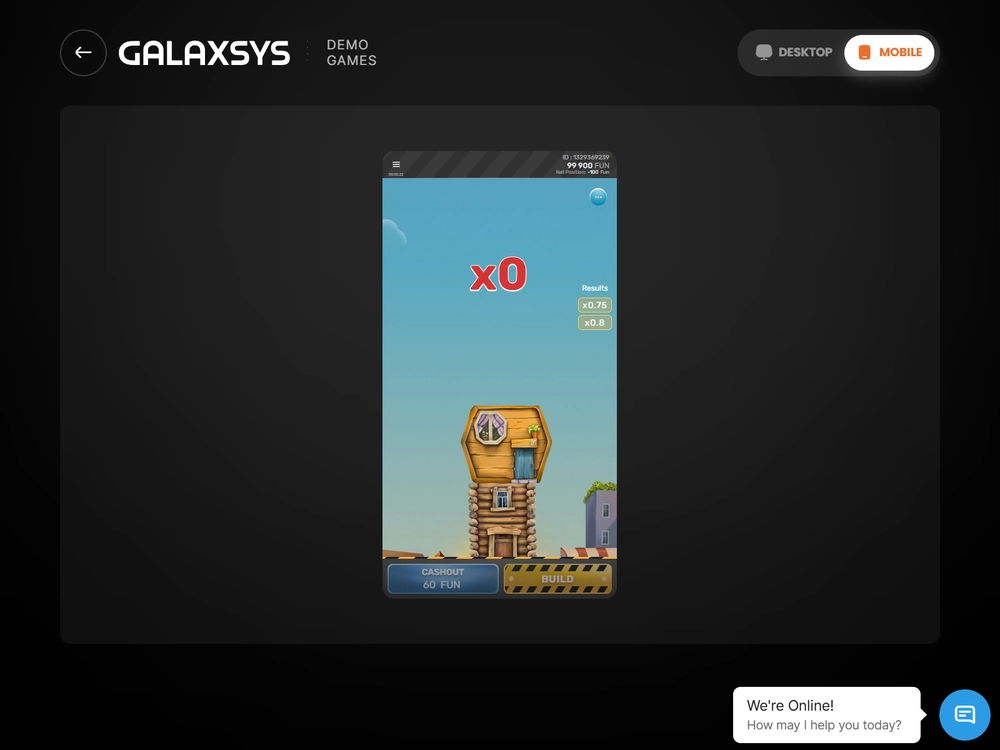
- Open History and find the original round. If you only have the request ID, use it to trace whether the server accepted the Build.
- Check the debit first, then look for the final status and either the payout or the refund. A pending entry is an open obligation until the record shows how it closed.
- Compare the final credit with the balance change for that round. Use the same round ID when you reopen history so that you can distinguish the existing settlement from a new wager.
An accepted round closes after an hour of inactivity if the connection never returns. A recorded win goes to the game balance automatically, so the round history is the record to check.
If the hash comparisons agree and a balance still looks wrong, the stake, credits and final status are the records to reconcile. An in-game Cashout settles the game cycle. Withdrawal from a cashier is a separate transaction.
Tower Rush at operators
7 operator reviews
These reviews cover different markets and test profiles. None of these operators offers authorised real-money Tower Rush in France.
-
 Profile score 6.1/10
Tested scenarios
- The international catalogue lists the Galaxsys original.
- The EUR test used Cartes Bancaires and SEPA Instant.
- The game earned 0% wagering credit in the tested welcome offer.
-
 Profile score 6.8/10
International platform
- The EUR test used Mastercard and SEPA Credit Transfer.
- An identity check preceded the first test withdrawal.
- Mini Games earn no wagering credit in the international Welcome.
-
 Profile score 6.3/10
Tested scenarios
- The separate 1w catalogue lists Tower Rush 2.
- The EUR cashier test used Visa and SEPA.
- The game earned 0% wagering credit in the tested welcome offer.
-
 Profile score 6.8/10
International platform
- The international listing gives the original 97% RTP.
- Clause 14.3 excludes players in France.
- Dragon Tower is a separate game.
-
 Profile score 6.3/10
Russian sportsbook
- RUB 100 minimum for deposits and withdrawals in the Russian sportsbook.
- The separate EUR test used a named bank account.
- The game earned 0% wagering credit in the EUR welcome test.
-
 Profile score 6.6/10
International platform
- The November Galaxsys Challenge listed the original.
- Betify excludes France from registration.
- Low turnover can trigger a withdrawal fee of up to 10%.
-
 Profile score 4.9/10
French platform
- ANJ authorisations cover sports betting, horse racing and poker.
- €10 minimum for deposits and ordinary withdrawals.
- French apps on Google Play and the App Store.
What a hash check means in France
For readers in France, a matching hash concerns the game record. Authorisation to offer a product is a separate question for the Autorité nationale des jeux (ANJ). The ten operator profiles considered here offer no authorised real-money route for the original game in France. Betclic France's approved categories are sports betting, horse-race betting and poker.
Use the FUN demo if you want to inspect the game without a monetary stake. Keep an example denominated in euros in its accounting context. A B2B supply licence concerns the supplier's activity in the stated jurisdiction, while the relevant French operator and category are listed in the ANJ register of authorised operators.
What to check first
Pick the record that answers your question. For the game result, check the commitment published before acceptance, the full digest and mapped outcome for the same round. For the payout, start with the stake, credited amount and final status. The methodology for checking game records explains how those forms of evidence are kept separate.

FAQ
Can a matching hash tell me what the next floor will be?
A matching hash checks values for the identified round only. The commitment provides a value for later comparison, and reproducing the outcome requires the inputs and mapping for that round. Treat a feed claiming to predict future floors as a separate claim. See the signs of false prediction offers.
Does a 1× Cashout count as a profitable round?
A 1× Cashout breaks even. In the demo I recorded a 5.00 FUN stake and a 5.00 FUN gross payout, for zero net. That was a settled round and counts towards turnover. A void reverses the debit and is excluded from comparable turnover.
Does the number of Temple Floor sectors tell me the odds?
The odds depend on the sector weights. Sector count describes the layout. Multiplying the accumulated amount by the sector that came up checks the payout for that result.

| Author | Gaspard Joly |
|---|---|
| Role | Senior iGaming, gambling and betting analyst |
| Experience | 9+ years analysing game providers, online gambling and payment systems |
| Published | 10 November 2026 |
| Device | Samsung Galaxy S25 FE, Android 16, One UI 8 |
| Methodology | Methodology |
Play responsibly
 Play responsibly
18+. Gambling can cause financial and personal harm. Set personal limits. For support, visit GamCare or GambleAware. See responsible gambling in France for local options.
Publisher and supplier licence
Digitain (MT) Limited · Malta Gaming Authority
MGA/B2B/592/2018
Tower Rush France is the publisher of this site. Galaxsys supplies the game. The Malta Gaming Authority issued critical gaming supply licence MGA/B2B/592/2018 to Digitain (MT) Limited on 29 January 2020. The company is registered in Malta under C 87254 at Tower Business Centre, 2nd Floor, Office 230, TRIQ IT-TORRI, Swatar Birkirkara, BKR 4013, Malta. Its UK Gambling Commission account number is 63601.
This B2B licence covers game supply. French operator permissions are listed separately by the ANJ. Malta Gaming Authority licence register · ANJ operator register